Flutter / visual systems mapping / offline-first UX
Keystone Overflow
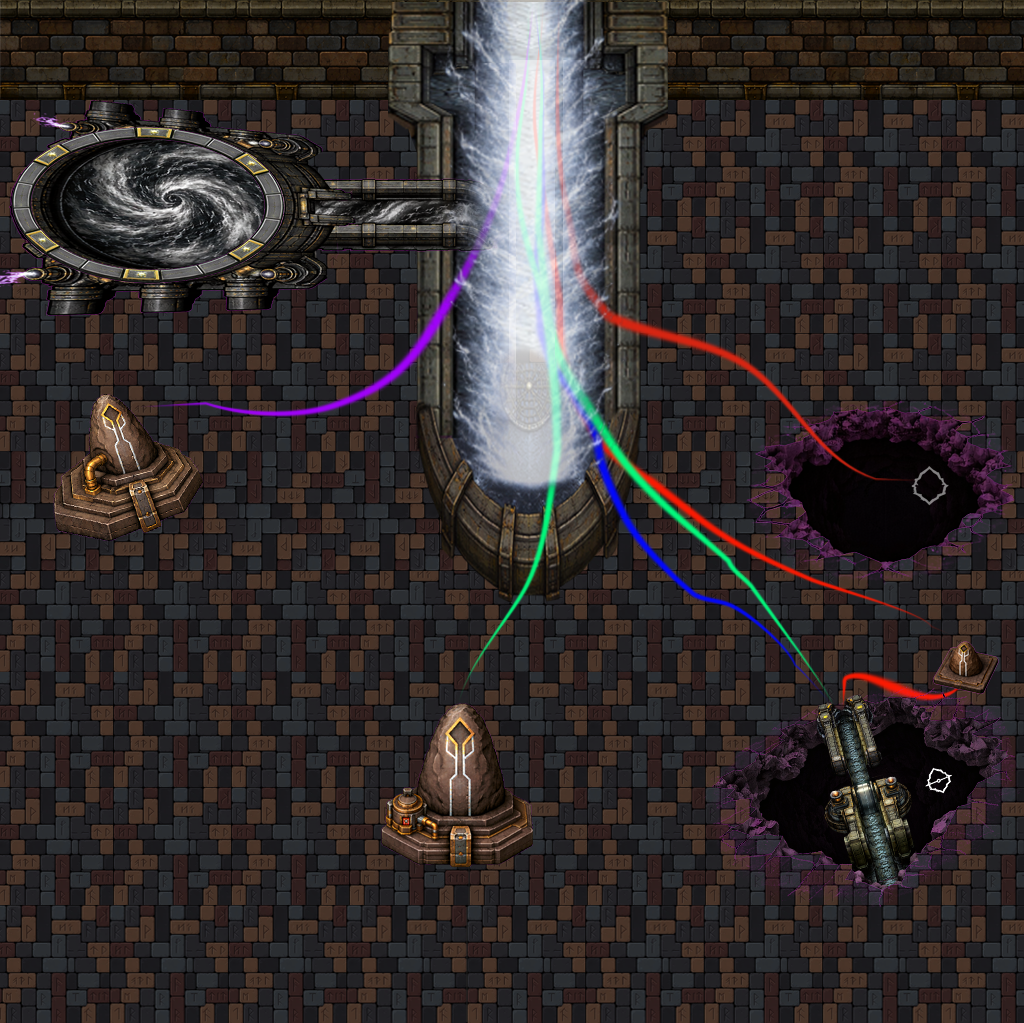
Keystone Overflow is an offline-first Flutter app and visual systems-mapping project that turns emotional load into an interactive factory. Pressure moves through major streams, keys, branches, support nodes, gates, voids, a reservoir, an outflow basin, and outside sinks.
Platform
Flutter / Dart
Type
Personal software project
Status
Working prototype and ongoing design iteration
Role
Concept, product design, engineering, asset integration, documentation
Overview
Keystone Overflow is one of my largest personal software and design projects. It uses the metaphor of an internal factory to make emotional pressure and support systems visible without presenting itself as medical, therapeutic, or diagnostic software.
Instead of treating reflection as a flat journal entry or checklist, Keystone Overflow models a system: raw energy flows through major streams, branches into specific keys, routes through nodes, interacts with gates and voids, builds pressure in a reservoir, and eventually moves toward an outflow basin and outside sinks.
What I Built
- A Flutter prototype for an interactive factory-like reflection map.
- A visual metaphor system for streams, keys, branches, nodes, reservoirs, gates, voids, stressors, and outside sinks.
- Custom asset groups for the internal factory, reservoir, gates, voids, keystones, wardstones, and outside structures.
- Branch-routing concepts for bundled paths, node targets, gate splits, reservoir returns, and outflow routing.
- Debug and alignment tooling for tuning asset bounds, hitboxes, branch anchors, and assembly placement.
- Save/load schema planning for scenarios, streams, keys, nodes, branches, pressure, stressors, sinks, and update history.
- A documentation foundation to preserve product meaning, mechanics, visual hierarchy, and future development decisions.
Design Direction
The app is intentionally offline-first. Manual editing is the core interaction model. Optional AI-assisted journal import is planned as a user-controlled copy/paste workflow that proposes structured changes for review, rather than a required embedded AI feature.